
Every cat owner knows the struggle: you bought a beautiful, filtered water fountain to keep your feline friend hydrated, but after a few months, the water flow slows to a trickle, or worse, the pump starts making a horrific grinding noise.
Most people think the pump is broken and throw it away. Don’t do that yet.
As a pet tech enthusiast, I’ve analyzed hundreds of user complaints and maintenance manuals. The truth is, 90% of fountain “failures” are simply caused by a buildup of biofilm (pink slime) and trapped pet hair inside the motor.
In this comprehensive guide, I will show you how to perform a professional-level deep clean on your cat fountain pump in under 10 minutes.
1. The Hidden Enemy: What is “Pink Slime”?
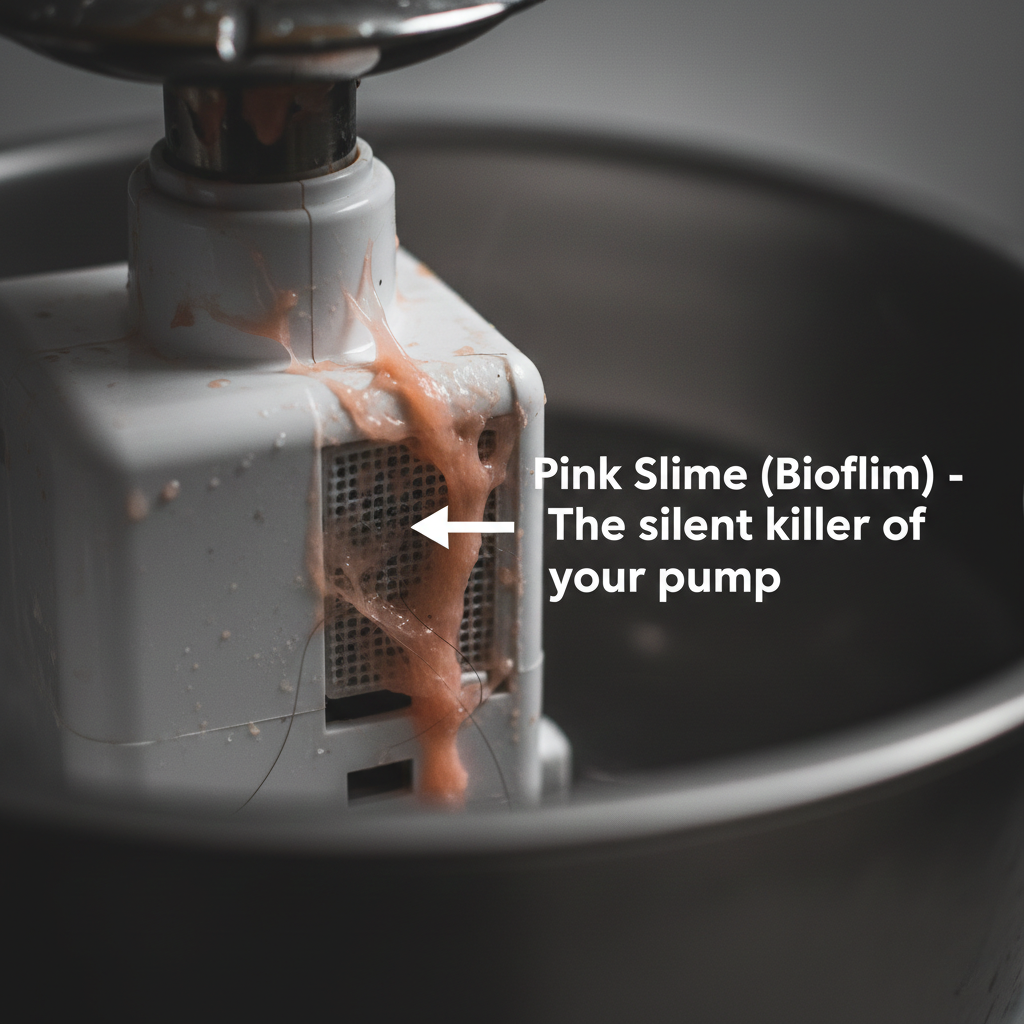
Before we dive into the cleaning, you need to understand what you’re fighting. Have you ever noticed a slippery, pinkish-orange residue in your cat’s bowl? That is Serratia marcescens, a type of bacteria that thrives in moist environments.
In the pet world, we call it Pink Slime. It’s not just gross; it can cause urinary tract infections or “cat acne” (black chin) in sensitive felines. If this slime gets inside your pump’s motor, it acts like glue, slowing down the magnetic impeller and eventually burning out the engine.
2. Preparation: Tools You’ll Need
You don’t need expensive cleaning kits. Most of these items are already in your kitchen:
A small, soft-bristled brush: An old toothbrush or a specialized straw brush works perfectly.
Cotton swabs (Q-tips): These are the secret weapon for reaching the tiny crevices inside the motor.
White Vinegar or Citric Acid: Essential for dissolving hard water calcium deposits (limescale).
Mild Dish Soap: To degrease the plastic components.
Pro Tip: If you want to clean your cat fountain without vinegar (due to the smell or material concerns), you can use a 1:10 bleach solution or specialized pet-safe enzyme cleaners, but ensure you rinse 3x more than usual.
3. Step-by-Step: The “AlgoPuppy” Deep Clean Method
Step 1: Disassemble the Fountain Basin
Unplug the device—safety first! Empty the water and remove the filters. Take the pump out of its suction-cup housing.
Step 2: Open the Pump Exterior
Most pet fountain pumps (like those from Petkit, Petlibro, or Veken) have a front faceplate. Use your thumbnail or a small flathead screwdriver to gently pry it off. Underneath, you’ll find a second cover (the intake plate) that protects the spinning parts.
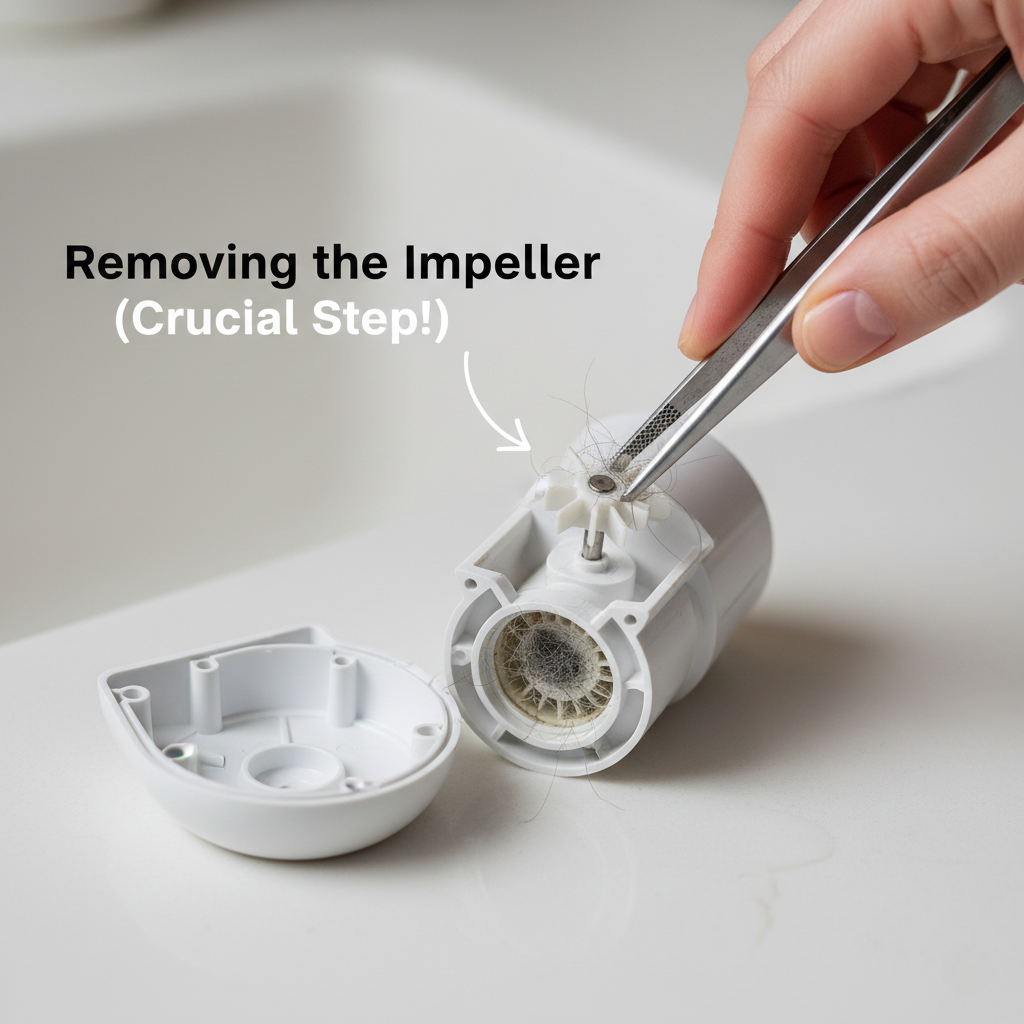
Step 3: The Secret Step — Removing the Impeller
This is where most people stop, and it’s why their fountains stay broken. Inside the motor cavity, you will see a small, white, fan-like part. This is the Impeller.
It is held in place by magnetism. Use a pair of tweezers or a Q-tip to pull it straight out.
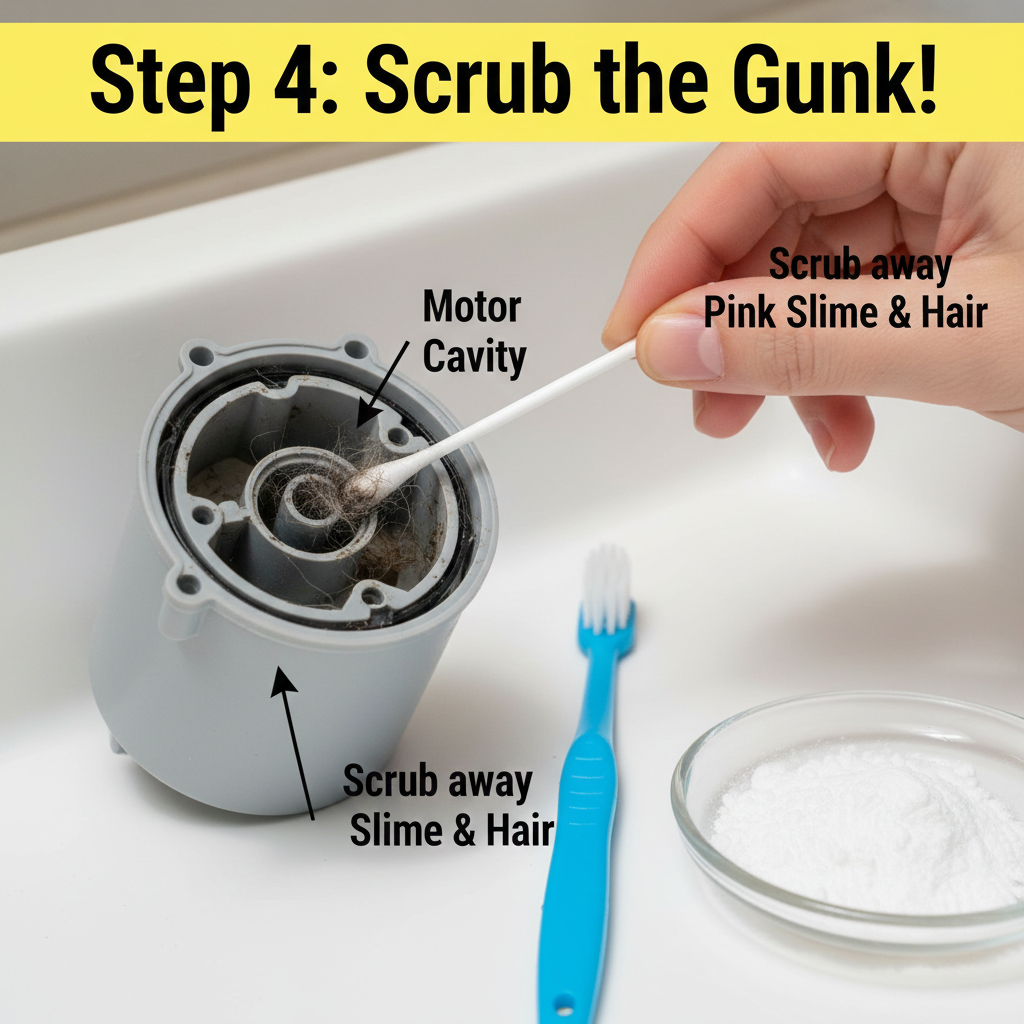
Step 4: Scrub the “Gunk”
Once the impeller is out, look inside the hole (the motor cavity). You will likely see a thick layer of slime and a “ring” of cat hair wrapped around the magnetic pin.
Use a Q-tip soaked in vinegar to scrub the inside of the cavity.
Scrub the impeller blades and the magnetic shaft until they feel smooth, not slimy.
Step 5: The Vinegar Soak
If you live in an area with hard water, your pump will have white, crusty buildup. Place the impeller and the pump body in a bowl of warm water mixed with two tablespoons of vinegar. Let it sit for 15 minutes. This dissolves the scale that causes that annoying grinding noise.
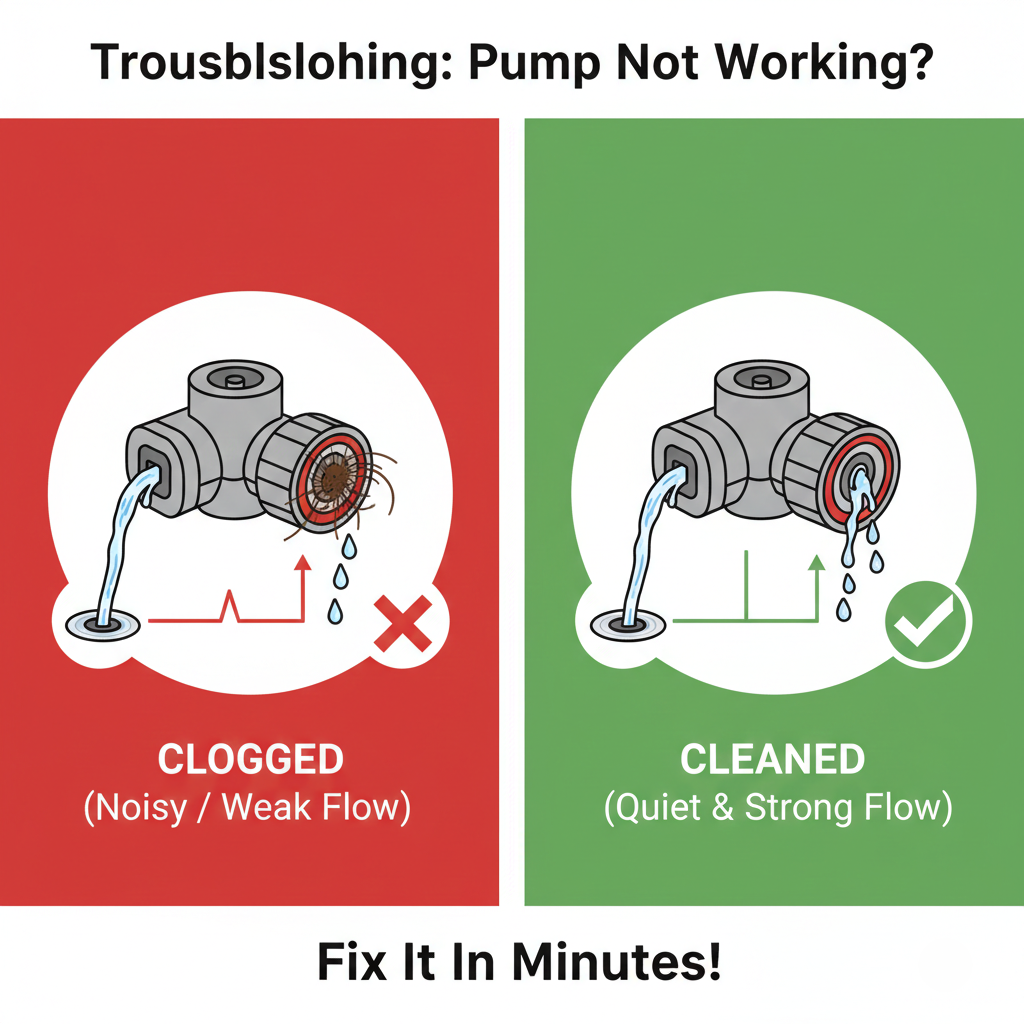
4. Troubleshooting: Why is My Pump Still Not Working?
If you’ve cleaned everything and the water still isn’t flowing, check these three things:
The “Air Lock”: Sometimes air gets trapped in the pump. Try turning it on and off 3-4 times while it’s fully submerged to “burp” the air out.
The Impeller Alignment: Make sure the impeller is pushed all the way down. You should feel the magnetic “snap.”
The Adapter: Check if the USB wall plug is providing enough power. Try plugging it into a different outlet.
5. Maintenance Schedule: How Often to Clean?
To keep your cat healthy and your pump running for years, follow this 2026-standard schedule:
Daily: Check water levels. Running a pump “dry” is the #1 cause of motor death.
Weekly: Basic rinse of the bowl and replacement of the pre-filter sponge.
Bi-Weekly: Full deep clean of the internal pump and impeller.
Monthly: Replace the carbon/ion-exchange filter.
6. Conclusion: A Happy Cat Starts with Clean Water
Cleaning a cat water fountain isn’t just about making the device last longer—it’s about the health of your pet. A quiet, clean fountain encourages cats to drink more, preventing kidney issues down the road.
By following this deep clean guide, you’ve saved $25 on a new pump and provided your cat with the fresh, oxygenated water they deserve.
Do you have a specific brand of fountain that’s giving you trouble? Leave a comment below, and the AlgoPuppy team will help you troubleshoot!
Master Your Pet Tech: