
How to Bathe a Cat: Step-by-Step Guide to Stress-Free Cat Bathing
How to Bathe a Cat Without Stress or Scratches
Bathing a cat can be a challenging task for many pet owners. Unlike dogs, most cats dislike water, and improper handling can lead to scratches, stress, or even injury. In this article, we’ll share step-by-step instructions on how to bathe a cat, how to keep your cat calm, and what products you should use for a safe and effective bath.
1. When Should You Bathe a Cat?
Many cats are excellent at grooming themselves, so frequent baths are unnecessary. However, bathing is important when:
Your cat has fleas or skin parasites.
There is sticky or toxic material on their fur.
They have long fur that easily mats.
They have certain medical conditions, such as allergies or fungal infections.
Tip: Most healthy indoor cats only need a bath every 4–6 weeks. Overbathing can dry out their skin.
2. Prepare Everything Before You Start
Preparation is key to a safe and stress-free experience.
What you’ll need:
A cat-safe shampoo (no human shampoos!)
Two towels
A non-slip mat for the sink or tub
A gentle sprayer or cup for rinsing
Cat treats to reward your kitty afterward
Optional but helpful:
Grooming gloves to reduce scratches.
A brush to remove loose fur before bathing.
3. How to Calm a Cat Before a Bath
If your cat is anxious, take a few minutes to calm them down before you start.
Play with your cat to release energy.
Give them a treat or catnip to create a positive association.
Speak in a soft, reassuring voice.
Close the bathroom door to prevent escapes.
Keyword Tip: This section naturally covers “how to calm a cat before a bath”.
4. Step-by-Step Guide to Bathe a Cat
Follow these steps to keep both you and your cat safe:
Step 1: Fill the tub or sink with a few inches of lukewarm water
Cats dislike deep water, so keep it shallow.
Step 2: Gently place your cat in the water
Hold them firmly but gently. A second person can help hold the cat if needed.
Step 3: Wet the fur slowly
Use a cup or sprayer to wet the fur from the neck down. Avoid the face and ears.
Step 4: Apply cat-safe shampoo
Lather gently and focus on dirty areas. Rinse thoroughly to avoid residue.
Step 5: Clean the face separately
Use a damp cloth to wipe the face, eyes, and ears.
Step 6: Rinse again thoroughly
Leftover shampoo can irritate the skin.
Step 7: Dry your cat
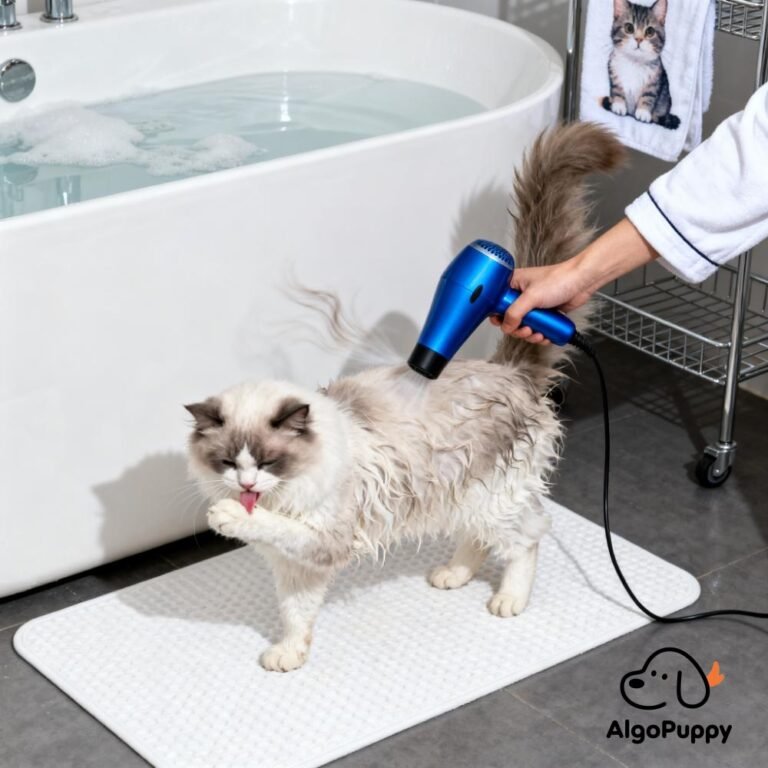
Use a soft towel to pat the fur dry. For long-haired cats, a low-heat blow dryer may be used if your cat tolerates it.
5. How to Bathe a Cat Without Getting Scratched
Many scratches happen because cats feel scared or trapped. Here are ways to prevent that:
Trim your cat’s nails before bath day.
Use grooming gloves for protection.
Avoid sudden movements or loud noises.
Keep sessions short — 5–10 minutes is ideal.
Reward your cat with a treat afterward to create positive memories.
6. Bathing a Kitten for the First Time
Kittens need special care during their first bath:
Make sure they are at least 8 weeks old.
Keep the water extra shallow and warm.
Use kitten-safe shampoo only.
Dry them immediately to prevent chills.
7. Alternatives: How to Clean a Cat Without Water
If your cat absolutely hates water, try these alternatives:
Dry shampoo for cats: Apply and brush out.
Pet wipes: Great for spot cleaning.
Regular brushing: Helps reduce dirt and loose fur naturally.
Keyword Target: “how to clean a cat without water”.
8. Best Shampoos for Bathing Cats
Choosing the right shampoo is critical for your cat’s health. Look for:
Hypoallergenic, fragrance-free formulas.
Medicated shampoos for specific skin issues (vet-approved).
Avoid products with essential oils that can be toxic to cats.
Recommended types:
Oatmeal-based shampoos for sensitive skin.
Anti-flea shampoos (only if approved by your vet).
Conclusion
Bathing a cat doesn’t have to be a stressful experience. By preparing properly, using the right techniques, and keeping your cat calm, you can keep your feline friend clean and healthy while avoiding scratches and anxiety. Remember, patience and positive reinforcement are key to success!